Samsung 65-Inch Class OLED 4K S95D Series HDR Pro Smart TV, Object Tracking Sound+, Real Depth Enhancer (2024) Review (2026)
Updated September 20, 2026 · Research-based review
Our verdict
Samsung's 65-inch S95D suits a home theater buyer in a bright or sunlit room, since its glare-free OLED panel cuts reflections better than a standard glossy OLED. Object Tracking Sound+ and Dolby Atmos back a flagship-level picture, but this 2024 model skips Dolby Vision, relying on HDR10+ instead.
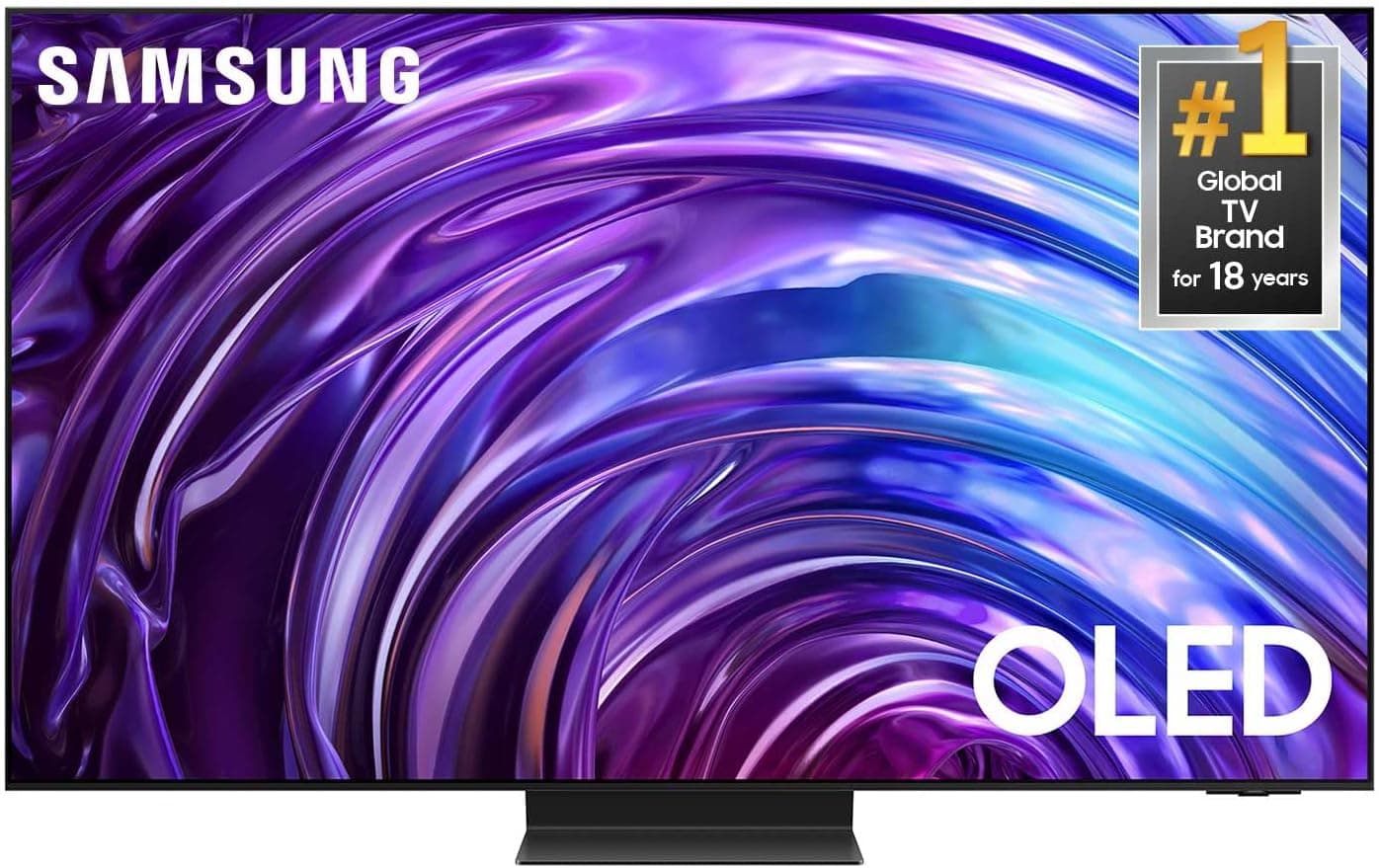
Samsung's 2024 65-Inch OLED S95D 4K TV with HDR Pro, Object Tracking Sound+ and Real Depth Enhancer.
Price range: See on Amazon
What we liked
- + Anti-glare OLED panel works well in rooms with lots of light
- + Object Tracking Sound+ makes on-screen audio follow the action
- + Real Depth Enhancer adds a sense of dimension to foreground detail
Trade-offs
- - Priced as a premium flagship, even as a previous year model
- - Lacks Dolby Vision, so some streaming HDR uses HDR10+ instead
Who this TV fits
The S95D is Samsung's flagship OLED for its 2024 lineup, positioned above the step-down S90D series, and its standout feature is a glare-free panel finish designed to noticeably reduce reflections compared to a standard glossy OLED screen. That makes it a strong fit for a living room or home theater with windows, overhead lighting, or other light sources that would normally wash out reflections on a typical OLED TV, rather than a fully blacked-out dedicated theater room where reflections are less of a concern to begin with. Buyers building a true light-controlled home theater room may get similar picture benefits from a lower-priced OLED without the anti-glare treatment, since that room type is exactly where the anti-glare panel matters least.
Picture technology and self-emissive pixels
Like other OLED TVs, the S95D uses self-emissive pixels, meaning each pixel produces its own light and can be switched fully off or have its brightness adjusted independently of its neighbors, which is what gives OLED displays their characteristic deep, true blacks and high contrast compared to LED-backlit LCD TVs. Samsung markets the panel alongside 4K AI upscaling, which processes lower-resolution source content to appear sharper on the 4K display, useful for older broadcast content, standard-definition material, or lower-bitrate streams that were not originally mastered in native 4K. Together, the self-emissive panel and upscaling processing are aimed at making both native 4K content and older or lower-quality sources look as sharp and high-contrast as the panel technology allows.
Sound features: Object Tracking Sound+ and Dolby Atmos
The S95D includes Samsung's Object Tracking Sound+ system along with Dolby Atmos support, which work together to make on-screen audio feel like it is coming from the specific part of the screen where the action is happening, rather than a flat, centered stereo image regardless of what is happening visually. This built-in audio processing is a genuine home theater feature on its own, though buyers planning to run a dedicated AV receiver and separate speakers will likely bypass the TV's internal audio processing chain in favor of their external system's own object-based audio handling. For anyone using the TV's built-in speakers as the primary audio path, though, this feature meaningfully improves how effects and dialogue are positioned compared to a TV without object-tracking audio processing.
HDR format support and its trade-off
One specific and verifiable trade-off with the S95D is its HDR format support: it does not include Dolby Vision, relying instead on HDR10+ for high dynamic range content, which is the opposite HDR format choice that most competing brands like LG make with their OLED lineups. This matters in practice because streaming services and physical media vary in which HDR format they use for a given title, so a movie or show mastered specifically in Dolby Vision will play back on the S95D using its base HDR10 or HDR10+ metadata instead of the Dolby Vision-specific processing, which is a real difference from a TV that supports both formats. Buyers who prioritize Dolby Vision content specifically should weigh this limitation against the panel's anti-glare and Object Tracking Sound+ advantages before deciding.
Where it fits in a home theater build
As a flagship-tier OLED, the S95D is aimed at buyers building a serious home theater centerpiece around premium picture quality rather than a budget or mid-range setup, and its price reflects that positioning even as a model from a prior year rather than Samsung's newest release. It pairs naturally with a soundbar or full AV receiver setup for buyers who want object-based audio beyond what the TV's internal speakers alone can deliver, and its anti-glare panel is a genuine differentiator for rooms that cannot be fully blacked out. Buyers specifically chasing Dolby Vision compatibility, or shopping on a tighter budget, should compare it directly against Samsung's own S90D or against Dolby Vision-supporting competitors before settling on this model.
Frequently asked questions
Does the S95D support Dolby Vision?
No, this model does not support Dolby Vision. It relies on HDR10+ for high dynamic range content instead.
What makes this OLED different from a standard glossy OLED?
The S95D uses a glare-free anti-reflection panel finish, designed to cut down on reflections in bright or lit rooms more than a typical glossy OLED screen.
What does Object Tracking Sound+ do?
It is Samsung's audio feature that makes on-screen sound feel like it comes from the specific part of the screen where the action is happening, working alongside Dolby Atmos support.
Is this TV better suited to a bright room or a dark theater room?
It is particularly well suited to a bright or lit room thanks to its anti-glare panel, though it performs well in a dark dedicated theater room too.
Prices change often, so check the current price and availability on Amazon.
Check price on AmazonHome Theater Setup Hub may earn a commission from the link above.