Samsung 55-Inch Class OLED S95F 4K Glare Free Smart TV (2025), NQ4 AI Gen3, HDR Pro, Motion Xcelerator 164Hz Review (2026)
Updated September 21, 2026 · Research-based review
Our verdict
Samsung's 2025 55 inch S95F is built for a bright living room, pairing a QD-OLED panel with a matte glare free coating and a 165Hz-capable panel that PC and console gamers will appreciate. The main trade off next to LG's OLED lineup is the missing Dolby Vision support, which matters if your streaming library leans on that format.
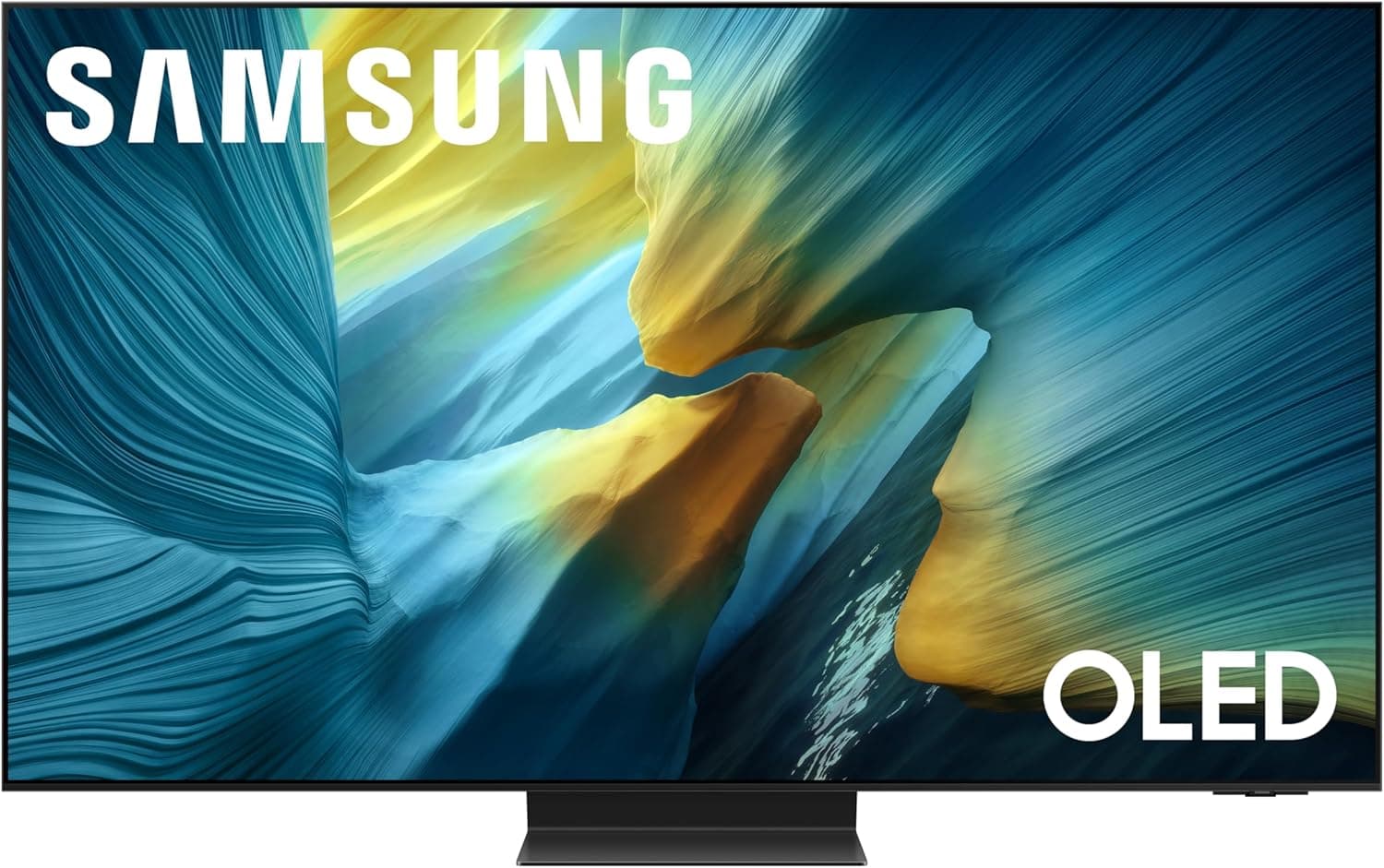
Samsung's 2025 55-Inch OLED S95F 4K TV with Glare Free screen, NQ4 AI Gen3, HDR Pro and Motion Xcelerator 164Hz.
Price range: See on Amazon
What we liked
- + Glare Free coating keeps OLED blacks deep even with windows nearby
- + Motion Xcelerator 164Hz is ideal for PC gaming at high frame rates
- + Samsung's QD-OLED panel is brighter than most standard OLEDs
Trade-offs
- - No Dolby Vision support, which LG OLEDs do offer
- - Top-tier pricing for a 55-Inch screen size
Picture quality and glare handling
The S95F uses Samsung's QD-OLED panel technology paired with a matte, glare free coating designed to cut reflections from windows and room lighting, which is one of the more common complaints about OLED TVs in bright rooms. Samsung's NQ4 AI Gen3 processor drives upscaling and picture processing, and the set supports HDR Pro along with HDR10 plus for high dynamic range content from services and discs that use those formats. QD-OLED technology is known for wide color volume and strong brightness relative to older OLED generations, and Samsung markets this panel as more efficient than its prior year model. Viewers watching in a den or living room with afternoon sun will notice the biggest benefit from the anti glare coating compared with a glossy OLED panel.
Gaming and motion performance
Motion Xcelerator on this model supports up to 165Hz, which is aimed squarely at PC gamers connecting a high refresh rate graphics card, and the panel's native 120Hz support also covers current generation consoles running games at 120 frames per second. OLED pixel response times are near instant, so fast panning scenes and competitive games show less motion blur than an equivalent LCD panel. Samsung's Vision AI features add scene and game specific picture adjustments automatically. Buyers building a PC gaming corner into a home theater or media room get more practical benefit from the 165Hz ceiling than someone using the TV mainly for cable and streaming content, where broadcast and app frame rates rarely approach that number anyway.
HDR format support, the main trade off
This TV does not support Dolby Vision, relying instead on HDR10 and HDR10 plus for dynamic metadata content. That matters because a meaningful share of streaming movies and shows on services like Netflix and Disney Plus are mastered in Dolby Vision, and without support the TV falls back to standard HDR10 for that content instead of using the scene by scene metadata Dolby Vision provides. LG's competing OLED lineup, including the C and G series, does support Dolby Vision, which is a real differentiator for shoppers who prioritize format coverage over peak brightness or anti glare performance. Samsung has held this position across recent generations, favoring its own HDR10 plus format instead of licensing Dolby's technology.
Audio and smart platform
The set includes a built in multi channel speaker array with Dolby Atmos decoding, giving reasonably immersive sound directly from the TV for casual viewing before a soundbar or AV receiver gets added to the room. Samsung's Tizen based smart platform runs the interface, app store, and the Vision AI assistant features, alongside Alexa built in for voice control without an external smart speaker. As a 2025 flagship model the software should receive ongoing updates for a few years, which matters for a TV expected to anchor a home theater setup for the better part of a decade before replacement.
Where it lands against rival OLEDs
Within its own guide the S95F ranks behind LG's 65 inch G5 and C5 OLEDs, both of which add Dolby Vision on top of similar brightness and motion performance, and behind Samsung's own prior generation S95D models at a larger 65 inch size. The 55 inch S95F still holds up well against those alternatives for anyone specifically wanting a QD-OLED panel with strong anti glare performance in a mid size screen, and the higher refresh ceiling suits a gaming focused setup. Shoppers who care most about Dolby Vision compatibility across their whole content library may be better served by an LG OLED at a similar price point instead.
Frequently asked questions
Does the Samsung S95F support Dolby Vision?
No, this TV does not support Dolby Vision. It supports HDR10 and HDR10 plus instead, using Samsung's preferred HDR format rather than Dolby's.
Is this TV good for PC gaming?
Yes, it supports Motion Xcelerator up to 165Hz, which benefits PC graphics cards capable of high refresh rates, on top of native 120Hz support for current game consoles.
Does the anti glare coating actually reduce reflections?
The panel uses a matte, glare free coating specifically designed to cut window and room light reflections, which is a common weak point on glossy OLED panels.
Does it have Alexa built in?
Yes, the TV includes Alexa built in for voice control alongside Samsung's own Tizen based smart platform and Vision AI features.
Prices change often, so check the current price and availability on Amazon.
Check price on AmazonHome Theater Setup Hub may earn a commission from the link above.