Optoma UHD55 4K Ultra HD DLP Home Theater and Gaming Projector, Built-In Speaker Review (2026)
Updated September 14, 2026 · Research-based review
Our verdict
The Optoma UHD55 fits movie and gaming fans who want a genuine 4K DLP image with low input lag for console and PC gaming, plus a built-in speaker so sound works on day one. Its onboard audio stays basic next to a real sound system, and the listing does not state a brightness figure, so compare specs before buying for a bright room.
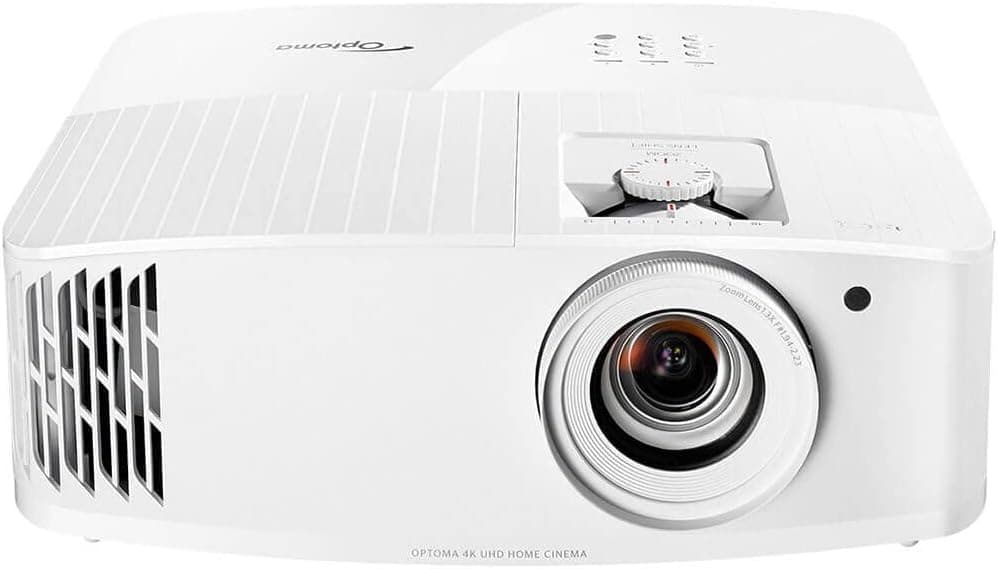
Optoma's UHD55 4K Ultra HD DLP projector for home theater and gaming, with a built-in speaker for simple setups.
Price range: See on Amazon
What we liked
- + 4K Ultra HD image is sharp for movies and modern consoles
- + Gaming mode keeps latency low for fast-paced play
- + Built-in speaker means sound works before adding a soundbar
Trade-offs
- - Built-in audio is basic compared with a dedicated sound system
- - Title gives no brightness figure, so compare specs for bright rooms
Who this 4K gaming projector fits
The UHD55 is built for a mixed-use home theater and gaming setup, where the same screen handles movie nights and console or PC sessions without swapping equipment. Its 4.3 millisecond input lag at 1080p and support for high refresh rates make it a strong match for gamers who care about responsiveness, not just image size, while its 4K UHD resolution and HDR support keep movies and modern game consoles looking sharp. The built-in speaker means it can go straight from box to a usable picture-and-sound setup in a den or spare room without buying a soundbar first. Anyone building a dedicated theater room who wants reference-level color accuracy and the brightest possible image for a fully dark room should compare it against higher-end single or three-chip models before deciding.
Brightness, resolution, and gaming specs explained
Optoma rates the UHD55 at 3,600 lumens using a single-chip DLP design with a 0.47-inch DMD chip that reproduces a true 4K UHD image at 3840 by 2160, with a dynamic contrast ratio rated at 1,200,000 to 1. Independent lab testing measured real-world output closer to about 3,478 ANSI lumens, slightly under the rated figure but still bright enough for rooms with some ambient light. Gaming performance is a highlight, with input lag measured at 4.3 milliseconds at 1080p and support for high frame rates that suit fast-paced titles better than most home theater projectors in this class. The projector includes 1.3x optical zoom and vertical lens shift for placement flexibility, along with HDR and HLG support, though as a single-chip DLP it is limited to 4K at 60Hz rather than the 4K at 120Hz some three-chip projectors offer.
Setting it up and using it day to day
The 1.3x zoom and vertical lens shift give more placement flexibility than a fixed-lens projector, letting it sit on a shelf or ceiling mount slightly off from dead-center of the screen without distorting the image as much as digital keystone correction alone would. Two HDMI 2.0 ports cover a console, a streaming box, or a PC, and the projector includes both wired and wireless networking for firmware updates and casting. The single 10-watt built-in speaker is enough for background sound while setting up or for casual viewing, but it is noticeably thinner and less dynamic than even an entry-level soundbar, so anyone serious about movie or game audio should plan to add one. At about 8.2 pounds and roughly 12 by 11 by 5 inches, it is light enough to move between rooms or store away when not mounted.
Trade-offs and how it compares with rivals
The clearest trade-off is brightness and color coverage relative to pricier options: the UHD55 covers about 97 percent of the DCI-P3 color gamut with its shutter enabled, solid for the price but behind projectors built specifically for color-critical home theater use. Against the Optoma UHD35, a similar single-chip 4K DLP gaming projector in the same lineup with a comparable input lag and lower list price, the UHD55 adds more lumens and lens shift flexibility in exchange for a higher price. Against the BenQ W5700, which targets dedicated home theater rooms with wider color coverage and higher rated contrast, the UHD55 leans more toward the mixed movie-and-gaming use case rather than reference-level cinema accuracy.
Verdict for gamers and movie fans sharing one screen
Our score of 7.8 out of 10 reflects a genuinely capable 4K gaming and home theater projector held back mainly by a basic built-in speaker and a rated brightness that measured slightly lower in independent testing. It is the right pick for anyone who wants one projector to handle both console gaming and movie nights without hunting for a separate sound system on day one. Anyone prioritizing the best possible color accuracy for a dedicated dark theater room, or anyone who already owns a full surround sound system and does not need onboard audio, may find better value elsewhere in this guide. For a flexible everyday 4K projector, the UHD55 remains a well-rounded choice.
Frequently asked questions
What is the input lag on the Optoma UHD55 for gaming?
It measures about 4.3 milliseconds at 1080p, which is fast enough for most console and PC gaming, and it supports high refresh rates for smoother fast-paced play.
How bright is the Optoma UHD55?
Optoma rates it at 3,600 lumens, though independent lab testing measured real-world output at about 3,478 ANSI lumens, close to the rated figure.
Is the built-in speaker enough to skip a soundbar?
It has a single 10-watt speaker, which works for casual or background viewing, but it is noticeably thinner than a dedicated soundbar or sound system for serious movie or game audio.
Does the UHD55 support 4K at 120Hz for gaming?
No. As a single-chip DLP projector it is limited to 4K at 60Hz, though it does support higher frame rates at 1080p for gaming.
Prices change often, so check the current price and availability on Amazon.
Check price on AmazonHome Theater Setup Hub may earn a commission from the link above.