Optoma UHD35 True 4K UHD Gaming Projector, 3600 Lumens, 4.2ms Response Time, 240Hz, HDR10 and HLG Review (2026)
Updated September 14, 2026 · Research-based review
Our verdict
The Optoma UHD35 is built for a gamer who also wants a real 4K HDR movie screen, pairing a 4.2 millisecond response time at 240Hz with 3,600 lumens of lamp based brightness. It is less flexible to place than a projector with powered zoom or lens shift, and the lamp will eventually need replacing.
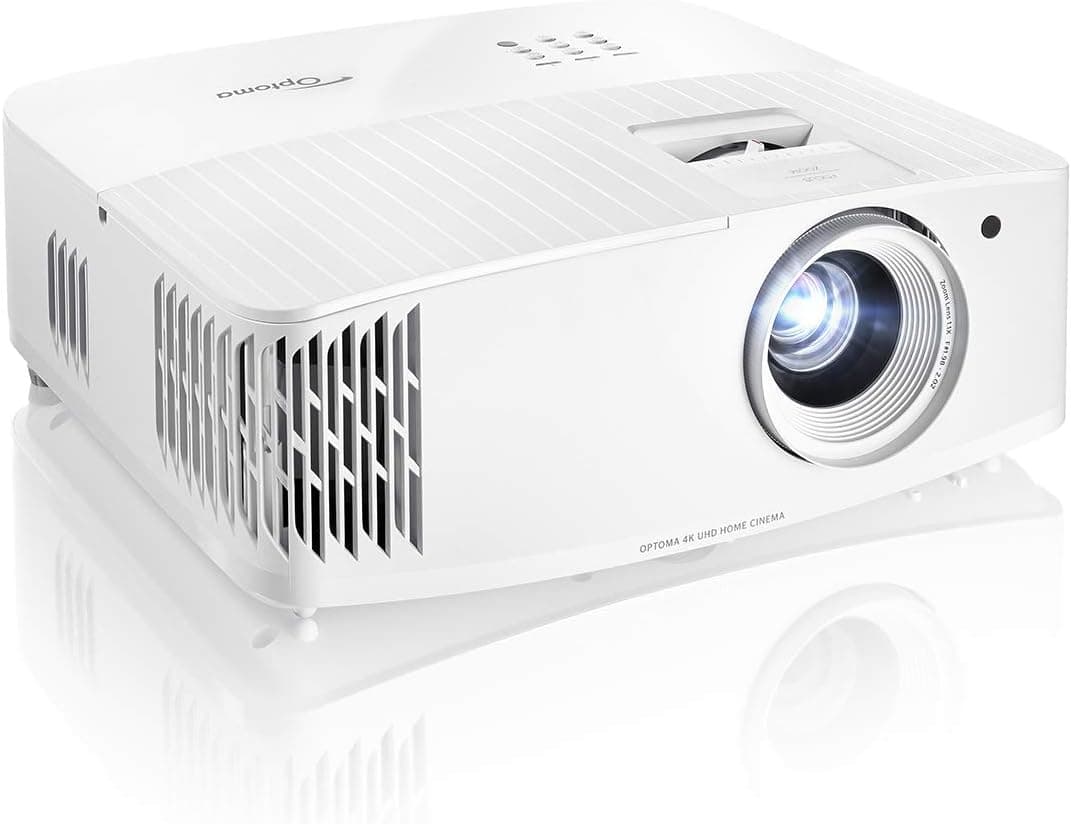
Optoma's UHD35 true 4K UHD gaming projector with 3600 lumens, 4.2ms response at 240Hz, HDR10 and HLG.
Price range: See on Amazon
What we liked
- + 4.2ms response time at 240Hz is excellent for competitive gaming
- + 3600 lumens keeps the picture punchy in rooms with some light
- + HDR10 and HLG support covers streaming and broadcast HDR
Trade-offs
- - Top refresh speeds need a lower resolution signal than full UHD
- - Lamp-based light source will eventually need a replacement
Who the UHD35 is built for
Optoma pitches the UHD35 squarely at gamers who do not want to give up 4K HDR picture quality for the sake of low input lag. Its 4.2 millisecond response time at 1080p with a 240Hz refresh rate is a genuinely fast number for a projector, closer to what dedicated gaming monitors offer than what most home theater projectors deliver. A 3,600 lumen rating means it can hold up reasonably well against some ambient light, useful for a living room that doubles as a gaming space rather than a fully blacked out theater. Movie fans get real value too, since HDR10 and HLG support and a 1,000,000:1 contrast ratio carry over from Optoma's home theater lineup, so the projector does not feel purely gaming focused.
What the 3,600 lumen, 240Hz specs mean day to day
The UHD35 produces native 3840x2160 resolution using a 0.47 inch Texas Instruments DMD chip with pixel shifting technology, driven by a 240 watt lamp. Optoma rates that lamp at 4,000 hours in Bright mode, 10,000 hours in Eco mode and up to 15,000 hours in Dynamic mode, figures that set the long term running cost since a replacement lamp is the main upkeep expense on a projector like this. The fast response numbers apply specifically in the 240Hz enhanced gaming mode at 1080p, while 4K HDR content still runs through the full pixel shifted pipeline for detail rather than the reduced resolution gaming mode, so the two are a trade off depending on what is on screen.
Setting it up and living with it
Connectivity is straightforward rather than smart-platform driven: two HDMI 2.0 ports cover a games console and a streaming box or disc player, alongside a VGA input, dual audio outputs, a USB-A power port and an RS232 port for control systems, but there is no built in WiFi or app store. The box includes the projector, an AC power cord, a remote control, two AAA batteries and a basic manual, everything needed for a straightforward setup on a shelf or a simple mount. Optoma backs the UHD35 with a 1 year parts and labor warranty plus a shorter 90 day warranty specifically on the lamp, worth noting since the lamp is the part most likely to need replacing over the projector's life.
Where it compares with the laser powered Optoma UHZ45
Optoma also sells the UHZ45, a laser powered sibling that trades the UHD35's replaceable lamp for a light source rated at 30,000 hours and backed by its own multi year warranty, along with a brighter 3,800 lumen rating and a faster 4 millisecond response time in its own 1080p 240Hz mode. The UHZ45 costs more and asks for less long term maintenance, while the UHD35 stays the more budget friendly way into fast, HDR capable 4K gaming. Against the XGIMI Horizon Pro, the UHD35 skips a smart platform and built in speakers entirely, but its 240Hz gaming mode and higher contrast rating outclass any lifestyle projector aimed mainly at streaming.
Bottom line for shoppers comparing options
Pick the UHD35 if fast, responsive 4K HDR gaming is the priority and you are comfortable connecting your own streaming device since there is no smart platform built in. The lamp based light source keeps the upfront setup simple and the running cost predictable through Optoma's rated lamp life, and the included accessories cover a basic shelf setup without extra purchases. Buyers who want a laser light source with less long term maintenance, or who need built in streaming apps and speakers, should look at the UHZ45 or a lifestyle projector like the XGIMI Horizon Pro instead of the UHD35.
Frequently asked questions
Is the Optoma UHD35 good for console gaming?
Yes. It offers a 4.2 millisecond response time at 1080p with a 240Hz refresh rate in its enhanced gaming mode, figures aimed specifically at fast paced console and PC gaming.
Does the Optoma UHD35 have built in streaming apps?
No. It relies on two HDMI 2.0 ports and has no built in WiFi smart platform, so it needs an external streaming device or console.
How long does the lamp last on the UHD35?
Optoma rates the lamp at 4,000 hours in Bright mode, 10,000 hours in Eco mode and up to 15,000 hours in Dynamic mode, and it carries a separate 90 day lamp warranty.
What is the difference between the UHD35 and the laser powered UHZ45?
The UHZ45 uses a laser light source rated for 30,000 hours with a longer light source warranty and slightly higher brightness, while the UHD35 uses a traditional replaceable lamp at a lower price point.
Prices change often, so check the current price and availability on Amazon.
Check price on AmazonHome Theater Setup Hub may earn a commission from the link above.