Mybecca [6 PACK] Acoustic Foam BEVEL Tiles Soundproofing Wall Panel 12 x 12 x 2 inch, Made in USA - Color: Charcoal Review (2026)
Updated September 14, 2026 · Research-based review
Our verdict
A 6 pack of 12 by 12 by 2 inch charcoal acoustic foam bevel tiles made in the USA, sized to treat a small section of wall for echo and flutter. The bevel cut looks cleaner than wedge foam but covers less surface area for absorption, and 6 tiles alone only treat a limited portion of a room.
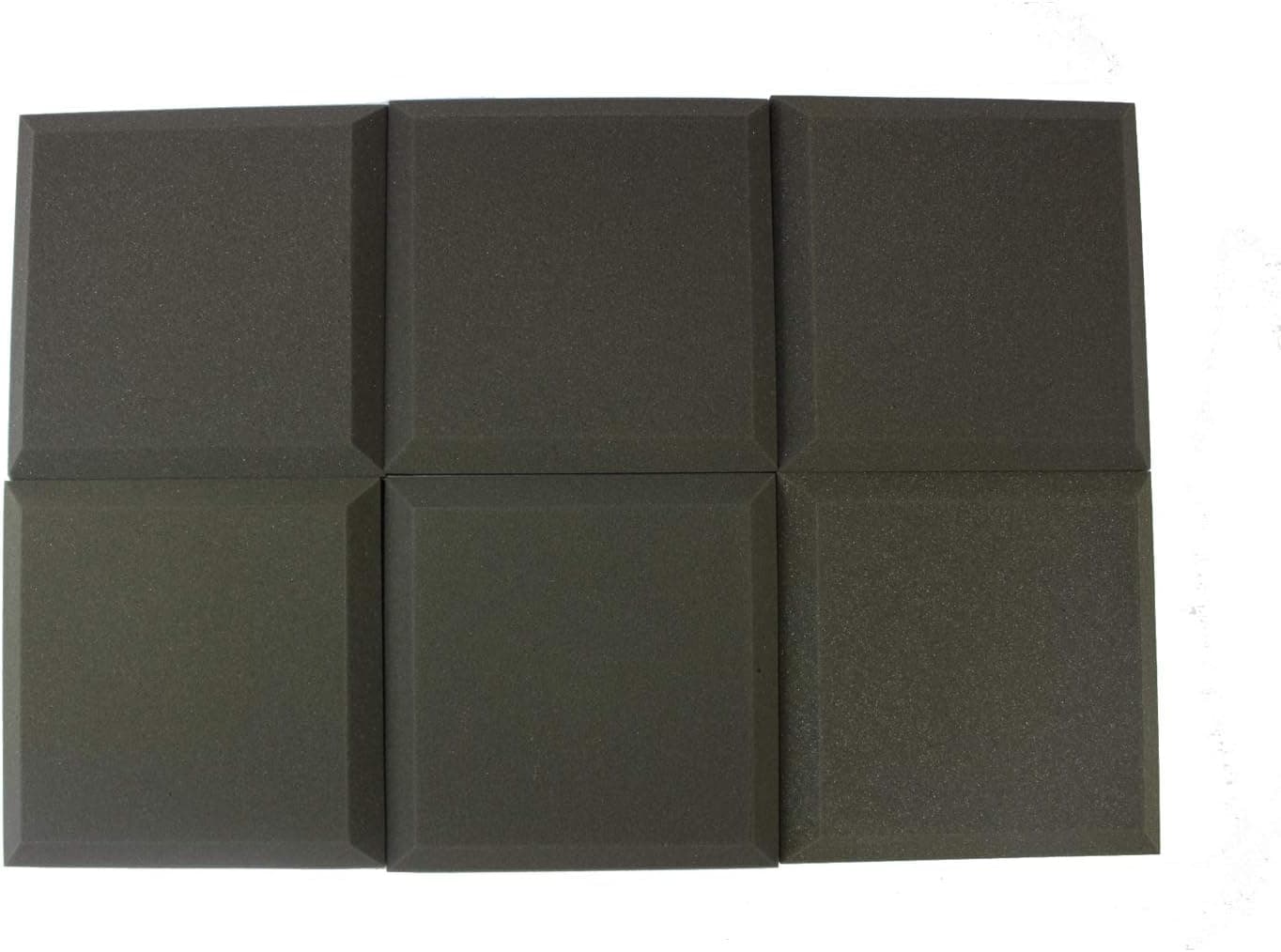
Mybecca's charcoal 6 PACK of 12 x 12 x 2 inch acoustic foam BEVEL tiles made in USA for wall treatment.
Price range: See on Amazon
What we liked
- + Made in USA foam for buyers who prefer domestic products
- + Bevel pattern offers a cleaner look than wedges
- + 2 inch thickness adds meaningful mid and high absorption
Trade-offs
- - Small pack covers limited wall area
- - Bevel tiles give less surface area than deep wedge cuts
What this pack is meant to treat
This is a 6 tile pack of Mybecca's acoustic foam in a bevel pattern, each tile measuring 12 by 12 by 2 inches, made in the USA in a charcoal color. Bevel foam uses angled cuts across the surface rather than the deep pyramid or wedge shapes common on studio foam, giving it a flatter, more uniform look on a wall while still breaking up direct sound reflections. With 6 tiles covering 6 square feet total, this pack size is meant for treating a specific problem area, such as the first reflection points beside a TV or near a pair of speakers, rather than covering an entire home theater or studio room, which would need several packs or a larger multi-pack option.
Bevel foam versus wedge foam
Compared with deep wedge or pyramid foam, bevel tiles like these trade some absorption efficiency for a cleaner, more finished look, since the angled bevel cuts have less total surface area and fewer deep pockets to trap sound than a wedge pattern of the same footprint. That makes bevel foam a reasonable pick for a media room or home theater where appearance matters alongside acoustics, such as a wall visible from the seating area, while a recording booth or dedicated studio space chasing maximum absorption would typically lean toward wedge or pyramid foam instead for the same wall area. The straight-cut sides on these tiles are also designed to butt up against each other cleanly when arranged side by side on a flat wall.
Installing and placing the tiles
Acoustic foam tiles like these are generally installed with spray adhesive, foam-safe mounting tape or push pins directly into drywall, though buyers should check the specific listing for whether adhesive is included before assuming it ships in the box. For a home theater or media room, the most effective placement is usually at first reflection points, meaning the section of side wall roughly between the listening position and each front speaker, plus any flat, hard wall surfaces contributing to slap echo or flutter in the room, rather than covering an entire wall edge to edge. Because these are foam tiles rather than rigid panels, they are lightweight and simple to reposition or add to later if you decide a treated area needs more coverage.
How this pack compares with other soundproofing foam options
Against other acoustic foam packs in the same guide, options like the HEMRLY and 50 Pack wedge-style panels cover far more total wall area for a similar or only somewhat higher price, since those are sold in larger pack sizes with a deeper wedge cut, and they score higher on this basis. This Mybecca 6 pack is a smaller, more targeted purchase, better suited to treating one specific wall section or reflection point than trying to acoustically treat a whole room, where a 50 tile pack would go much further per dollar spent even though the coverage-per-tile comparison is not identical between bevel and wedge cuts.
Who should buy this pack
This pack fits buyers who want to treat a small, specific section of wall, such as first reflection points near a home theater's front speakers, and who prefer the cleaner look of bevel-cut foam over deep wedge shapes. It also suits anyone who specifically wants foam made in the USA over imported alternatives. Skip it if your goal is treating an entire room or a large home theater or studio space, since 6 tiles only cover 6 square feet, and a larger pack such as a 24 or 50 tile set would cover far more wall area for a more complete acoustic treatment.
Frequently asked questions
How much wall area does this 6 tile pack cover?
Each tile is 12 by 12 inches, so the 6 pack covers 6 square feet total, enough for a targeted area such as a first reflection point rather than a full wall or room.
Is mounting adhesive included with the tiles?
This is not clearly stated on the listing, so check the current product page before buying, and plan on spray adhesive, foam-safe tape or push pins if adhesive is not included.
What is the difference between bevel and wedge foam?
Bevel foam uses angled cuts for a flatter, cleaner look with somewhat less absorption efficiency, while wedge or pyramid foam has deeper cuts that generally absorb more sound for the same footprint.
Where should I place these tiles for the best effect?
First reflection points on the side walls between the listening position and the front speakers, plus any hard flat surfaces causing slap echo, are typically the most effective placements for a small pack like this.
Prices change often, so check the current price and availability on Amazon.
Check price on AmazonHome Theater Setup Hub may earn a commission from the link above.