50 Pack Acoustic Foam Panels, Premium Sound Proof Foam Panels Black, Soundproof Wall Panels, High Density Acoustic Panels, Sound Absorbing for Studio Office Home, 12 x 12 x 1 Inch Review (2026)
Updated September 14, 2026 · Research-based review
Our verdict
This 50 pack of black acoustic foam panels fits anyone covering a large media room, home studio, or gaming wall who wants to cut down echo and flutter without paying per-panel prices from a specialty store. The bulk count and 12 x 12 x 1 inch size cover walls quickly, but the panels tame reflections rather than block sound between rooms.
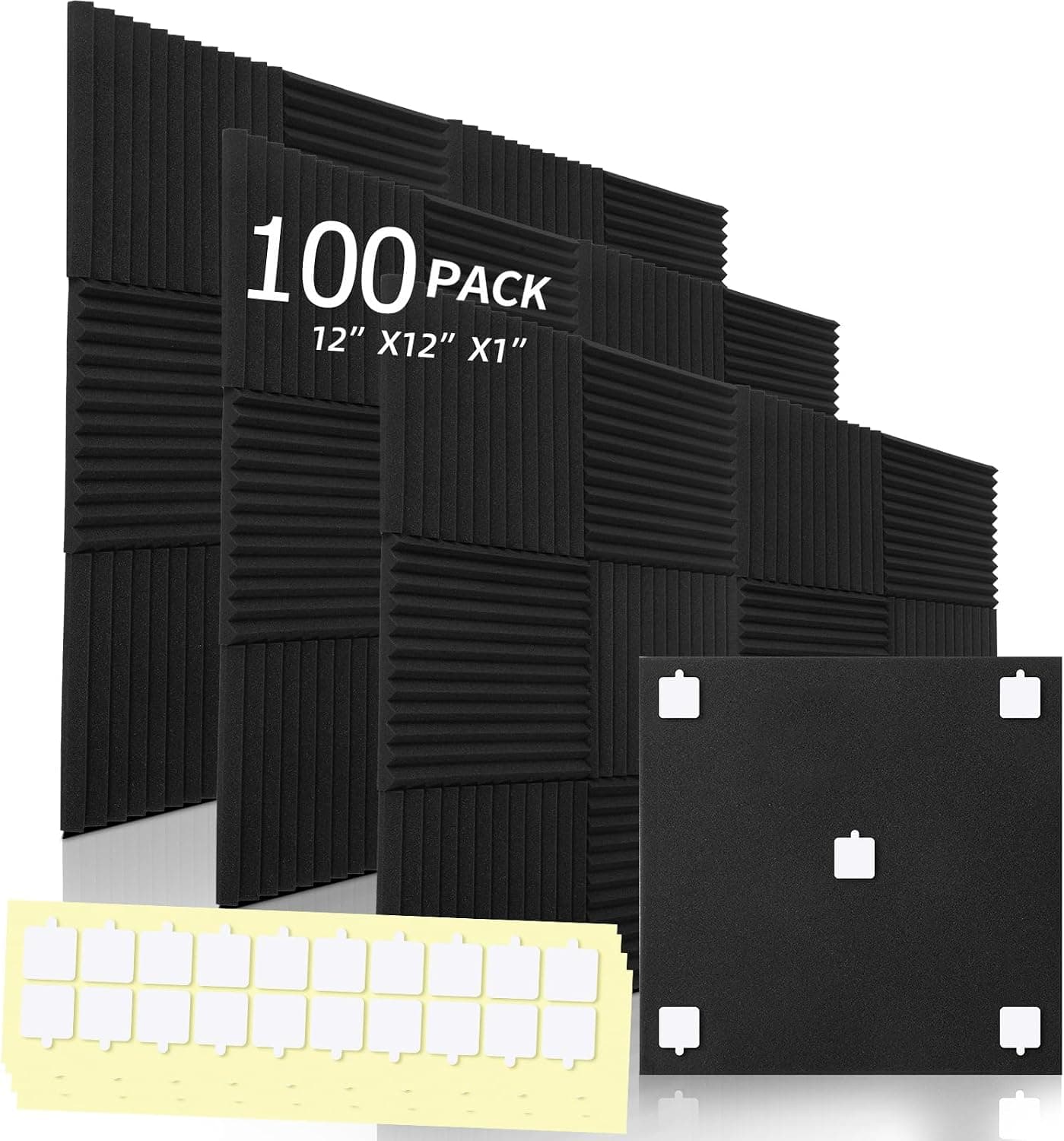
A black 50 Pack of 12 x 12 x 1 Inch premium high density acoustic foam wall panels for studios, offices and homes.
Price range: See on Amazon
What we liked
- + Bulk 50 Pack lowers cost per panel for big walls
- + Black finish looks tidy in media and gaming rooms
- + Works for home offices and streaming setups too
Trade-offs
- - Acoustic foam reduces echo but does not soundproof
- - Panels may arrive compressed and need time to expand
Who this bulk pack is for
This is a 50 count pack of 12 by 12 by 1 inch black acoustic foam panels, sized for anyone treating a full wall, a home recording corner, a gaming room, or a media room rather than just a single spot behind a speaker. The bulk count brings the cost per panel down compared with buying foam in small quantities, which matters most for larger rooms that need broad wall coverage to noticeably tame echo. It also works for a home office that doubles as a call or streaming space, where reducing room reflections improves voice clarity on calls and recordings. Anyone who only needs a handful of panels for a small area would likely get better value from a smaller pack sized closer to their actual wall space.
What the foam is made of and does
Each panel measures 12 by 12 by 1 inch and is made from high density foam in a wedge style surface designed to scatter and absorb sound waves rather than reflect them back into the room. Acoustic foam like this works by converting some of the sound energy that hits it into a small amount of heat through friction inside the foam's porous structure, which reduces flutter echo, slap back, and general reverberation in an untreated space. This is fundamentally different from soundproofing, which is about blocking sound from passing through a wall, floor, or ceiling using mass and airtight seals rather than absorption. Because foam is porous by design, sound still passes through it, so it does not stop noise from a neighboring room or from traveling outward through a shared wall.
Installing and living with the panels
Panels typically arrive compressed for shipping and need some time, often a day or more, to expand back to their full one inch thickness once unpacked, so it helps to unbox them before planning an install date. Mounting is usually done with adhesive spray, double-sided tape, or push pins directly into drywall, and covering a full wall with 50 panels in this 12 by 12 inch size works out to roughly 50 square feet of coverage if placed edge to edge. For a home theater or gaming room, focusing panels on the first reflection points, the spots on side and rear walls where sound first bounces before reaching a listener, tends to deliver more noticeable improvement than spreading panels thinly across an entire room. Over time the foam holds its shape well indoors, though it should be kept away from direct sunlight and open flame sources.
What these panels will and will not fix
These panels are well suited to reducing harshness and echo in a room with hard, reflective surfaces like drywall, glass, or hardwood, which is a common issue in home theaters and gaming rooms with minimal furniture or soft materials. They are not a solution for blocking sound transfer to neighbors, a shared wall, or a downstairs room, since that requires mass-loaded materials, sealed gaps, and often structural changes rather than surface-mounted foam. Buyers hoping to stop noise from leaving or entering a room, such as apartment dwellers dealing with noise complaints, should research soundproofing methods separately rather than expecting foam panels to solve that problem. For in-room clarity and reduced echo, though, this is exactly the kind of treatment that works as intended.
Verdict and who should look at soundproofing instead
This 50 pack earns our score of 7.6 out of 10 for delivering a large, affordable coverage area of genuine acoustic treatment that noticeably reduces echo in home theaters, studios, and gaming rooms. It is a good fit for anyone treating a full wall or multiple walls who wants bulk pricing rather than buying panels individually. Anyone whose main goal is stopping sound from leaving or entering a room, rather than improving how a room sounds internally, should research dedicated soundproofing materials and techniques instead of relying on foam panels alone. For in-room acoustic improvement at scale, this pack covers a lot of wall space for the price.
Frequently asked questions
Does this foam soundproof a room from outside noise?
No, acoustic foam absorbs echo and reverberation inside a room but does not block sound from passing through walls, floors, or ceilings, since it is porous rather than mass-loaded.
How much wall space does the 50 pack cover?
Each panel measures 12 by 12 inches, so 50 panels placed edge to edge cover roughly 50 square feet of wall area.
Do the panels need time to expand after arrival?
Yes, foam panels commonly ship compressed and can take a day or more to fully expand back to their listed one inch thickness once unpacked.
Where should panels be placed for the best effect?
Placing panels at first reflection points on side and rear walls, where sound bounces before reaching a listener, generally gives a more noticeable improvement than spreading them evenly across a whole room.
Prices change often, so check the current price and availability on Amazon.
Check price on AmazonHome Theater Setup Hub may earn a commission from the link above.