Yamaha RX-A2A AVENTAGE 7.2-Channel AV Receiver, 8K HDMI, eARC, Dolby Atmos, DTS:X, MusicCast Review (2026)
Updated September 14, 2026 · Research-based review
Our verdict
The Yamaha RX-A2A AVENTAGE suits a home theater owner assembling their own 7.2-channel speaker system who wants 8K-ready HDMI, eARC, and MusicCast multi-room in one receiver. Its AVENTAGE build gives a detailed, clean sound character, but it ships without speakers and costs more than similarly specced Denon or Sony models.
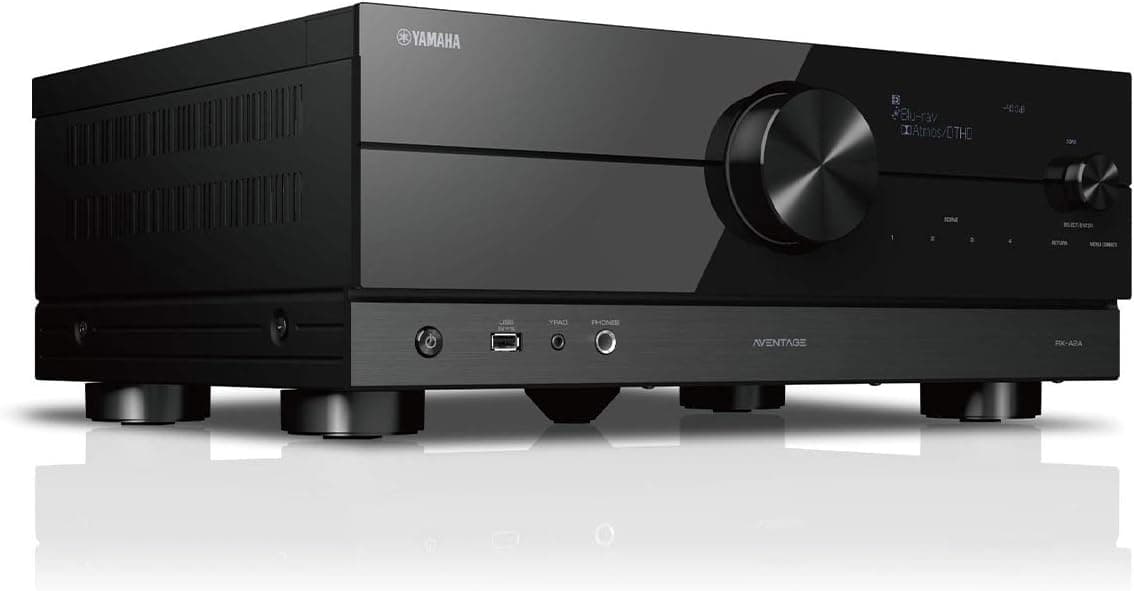
Yamaha's RX-A2A AVENTAGE 7.2-Channel AV receiver with 8K HDMI, eARC, Dolby Atmos, DTS:X and MusicCast multi-room.
Price range: See on Amazon
What we liked
- + MusicCast links Yamaha speakers for whole-home audio
- + eARC receives lossless audio back from smart TV apps
- + AVENTAGE build quality gives a clean, detailed sound character
Trade-offs
- - Speakers not included, unlike the in-wall bundle version
- - Priced above similar channel receivers from Denon and Sony
Who the RX-A2A fits
This receiver is built for someone assembling a home theater from separate speaker components rather than buying a bundled speaker package, since it ships as electronics only with no drivers included. It supports 7.2 channels of built-in amplification, so it fits a room set up for a full surround layout or a modest height-channel configuration for Dolby Atmos, up to a 5.1.2 arrangement. Anyone already invested in Yamaha's MusicCast ecosystem, with other MusicCast speakers or a soundbar elsewhere in the home, gets extra value here since the RX-A2A links into that same whole-home audio network. Buyers who want a receiver bundled with matching speakers, rather than building a system piece by piece, should look at a bundled package instead of this standalone unit.
What the AVENTAGE build offers
The RX-A2A drives seven channels at roughly 100 watts each into 8 ohms, measures about 17.1 by 9.6 by 14.6 inches, and weighs around 22.5 pounds, putting it in the mid-size range for a 7.2-channel receiver. Video handling covers seven HDMI inputs and one HDMI output rated for 8K at 60Hz and 4K at 120Hz, with HDCP 2.3 support and eARC on the output for pulling lossless audio back from a smart TV's own streaming apps. On the audio side it decodes Dolby Atmos and DTS:X for object-based surround sound, alongside Dolby Vision, Hybrid Log Gamma, and BT.2020 for HDR video pass-through. Network features include Wi-Fi, Bluetooth, Apple AirPlay 2, and MusicCast, Yamaha's multi-room audio platform for linking speakers and receivers across a house.
Setting it up and living with it
Initial setup typically runs through Yamaha's YPAO room correction system, which measures the room with an included microphone and adjusts channel levels, distances, and equalization automatically for the connected speaker layout. Because it supports up to 8K and 4K at 120Hz, gamers connecting a current console benefit from the higher HDMI input count and pass-through without needing a separate switch. Day to day, the MusicCast app handles source selection, multi-room grouping, and streaming service access, while the receiver's own front panel and remote cover the basics of volume and input switching. Owners setting up a full 7.2 speaker layout should plan for the additional cost and complexity of sourcing matching front, center, surround, and height speakers separately, since none are included.
How it compares to rival receivers
Against the Denon AVR-X2800H, another 7.2-channel receiver with 8K HDMI, Dolby Atmos, and DTS:X, the two land close in features, with Denon's HEOS platform serving a similar multi-room role to Yamaha's MusicCast, so the choice often comes down to which app and speaker ecosystem a household prefers. Against the Sony STR-AN1000, which also covers 7.2 channels with 8K and HDMI 2.1, Sony brings Chromecast built in alongside AirPlay, while Yamaha leans on its AVENTAGE build quality and YPAO room correction as differentiators. The RX-A2A's price tends to run above comparable channel-count receivers from both Denon and Sony, so buyers focused purely on cost per channel may find better value elsewhere in this class.
Verdict and who should look elsewhere
The RX-A2A earns our score of 8.8 out of 10 for combining 8K-ready HDMI, eARC, Dolby Atmos and DTS:X decoding, and MusicCast multi-room into one AVENTAGE-tier receiver with a clean, detailed sound character. It is best suited to buyers who already have or plan to buy their own speaker set and want a receiver with headroom for future 8K sources and multi-room expansion. Anyone on a tighter budget, or who wants a receiver plus speakers in a single purchase, should compare it against similarly specced Denon or Sony models or a bundled AVENTAGE package with in-wall speakers included. For a household building a serious surround system around their own speaker choices, the RX-A2A is a strong hub to build around.
Frequently asked questions
Does the Yamaha RX-A2A come with speakers?
No, this listing is the receiver only. Speakers need to be purchased separately, or you can look for a bundled AVENTAGE package that includes them.
How many HDMI ports does the RX-A2A have?
It has seven HDMI inputs and one HDMI output, with the output supporting eARC and 8K at 60Hz or 4K at 120Hz for compatible sources and displays.
Is the RX-A2A good for gaming?
Its HDMI inputs support 8K and 4K at 120Hz with HDCP 2.3, which suits current game consoles, though you should confirm your specific console and TV combination supports the same modes.
What is MusicCast on this receiver?
MusicCast is Yamaha's multi-room audio platform, letting the RX-A2A group with other MusicCast speakers or receivers around the house and stream music through a shared app.
Prices change often, so check the current price and availability on Amazon.
Check price on AmazonHome Theater Setup Hub may earn a commission from the link above.