TV Antenna Indoor, Digital Amplified Indoor HDTV Antenna, 1080p VHF UHF Television Local Channels Detachable Signal Amplifier and 16.5ft Long Coax Cable Review (2026)
Updated September 21, 2026 · Research-based review
Our verdict
A reasonable starting point for cord-cutters who want free local channels without a subscription, especially if you are within a moderate distance of broadcast towers. Reception still depends heavily on your location and placement, so results will vary more than the packaging numbers suggest.
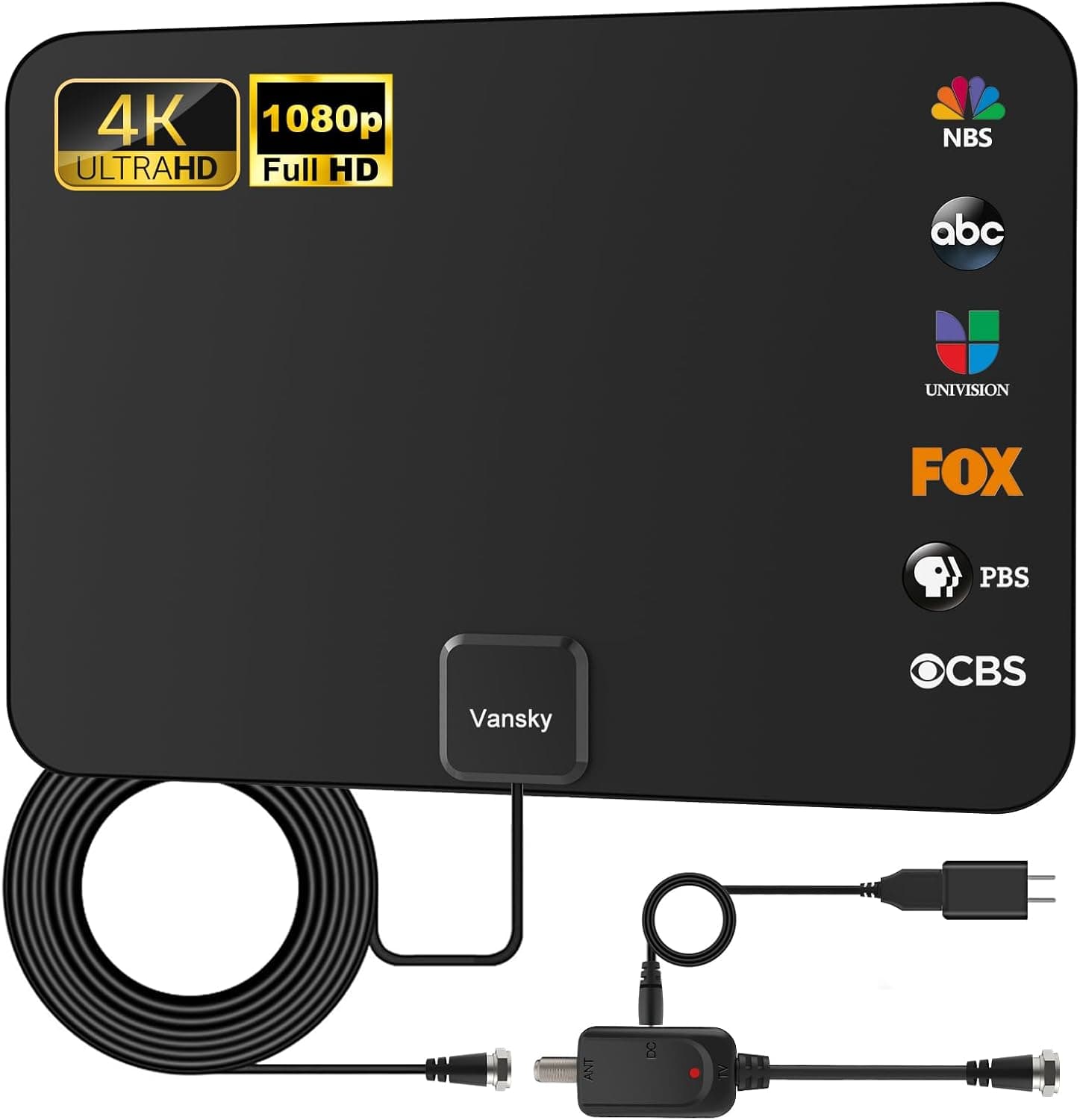
An indoor amplified HDTV antenna with a detachable signal amplifier and 16.5ft coax cable for VHF and UHF local channels.
Price range: See on Amazon
What we liked
- + Detachable amplifier lets you test with and without boost
- + 16.5ft coax cable helps reach the best window position
- + VHF and UHF reception covers most local broadcast channels
Trade-offs
- - Indoor reception still depends heavily on distance to towers
- - Flat antennas can be sensitive to where they are placed
Who this antenna is for
This antenna targets cord-cutters and anyone wanting a backup for free over-the-air local channels such as news, network affiliates, and weather broadcasts without paying a monthly subscription. It is a flat, indoor panel style antenna paired with a detachable signal amplifier, a common design for budget antennas sold for apartments, bedrooms, or secondary TVs where running an outdoor antenna is not practical. Because reception on any indoor antenna depends heavily on distance to broadcast towers and what is between the antenna and those towers, such as hills or other buildings, this is best suited to households in suburban or urban areas reasonably close to a broadcast market rather than rural homes far from any towers.
Amplifier and cable
The included amplifier is detachable, which is a genuinely useful design choice since it lets you test reception both with and without the boost active. Households very close to broadcast towers sometimes get a cleaner signal with the amplifier disconnected, since amplifying an already strong signal can occasionally cause overload distortion, while homes farther out generally benefit from leaving it connected. The listing includes a 16.5-foot coaxial cable, which gives real flexibility in positioning the antenna away from the TV itself, for example near a window or higher on a wall, both of which commonly improve reception compared to placing the antenna directly behind the television.
Reception and channel range
The antenna covers both VHF and UHF frequency bands, which matters because local broadcast channels are split across both, and an antenna that only handles one band will miss some local stations even with strong overall reception. It supports 1080p HDTV signal reception for the digital broadcast standard used by US stations today. As with any indoor amplified antenna, marketed range figures represent best-case, line-of-sight conditions rather than a guarantee, and actual results depend on your specific distance from towers, elevation, and obstructions like trees or nearby buildings, so real-world channel counts can vary significantly between two homes in the same general area.
Placement tips that affect results
Because this is a flat, directional-leaning indoor design, placement has an outsized effect on how many channels come in clearly. Windows facing the direction of local broadcast towers tend to perform better than interior walls, and higher placement, such as near the ceiling or on an upper floor, generally outperforms placing the antenna low or behind furniture. The long coax cable is genuinely helpful here since it removes the constraint of placing the antenna right next to the TV. Anyone missing expected channels should try a free online tool that maps tower locations relative to their address, then reposition and rescan the TV's channel search rather than assuming the antenna itself is faulty.
Realistic expectations
Indoor amplified antennas in this price and style category generally perform well for viewers within a moderate distance of a broadcast market, but they are not a guaranteed replacement for cable or satellite in every home, particularly rural or heavily obstructed locations. The detachable amplifier and long cable are both practical, useful features that give buyers room to experiment with placement and amplification rather than being locked into one fixed configuration. Buyers should treat any long-range mileage claims on antenna packaging as a best-case ceiling rather than an expected result, and plan on some trial and error with positioning before settling on a final spot.
Frequently asked questions
Does this antenna need a power outlet?
The antenna itself is passive, but the detachable signal amplifier needs power to boost the signal.
How long is the included cable?
The antenna includes a 16.5-foot coaxial cable for flexible placement away from the TV.
Should I use the amplifier if I live close to broadcast towers?
Households very close to towers sometimes get better reception with the amplifier disconnected, since it is detachable for testing both ways.
Does it pick up both VHF and UHF channels?
Yes, it is designed to receive both VHF and UHF local broadcast bands.
Prices change often, so check the current price and availability on Amazon.
Check price on AmazonHome Theater Setup Hub may earn a commission from the link above.